Strategic pre-sale design, styling, and listing preparation for homeowners competing in Minnesota’s crowded suburban resale and new construction market.
When the Move Is Already Happening, Strategy Matters
Some homes simply need staging.
Others need something far more strategic.
For this Maple Grove home, the answer was both.
Our clients were preparing for a mandatory relocation. Their next chapter was already in motion, which meant timing mattered just as much as outcome.
Adding pressure, this wasn’t their first attempt at selling.
Two years earlier, the home had tested the market with disappointing results. Interest was minimal. Momentum never materialized. Understandably, the experience left hesitation behind.
This time, uncertainty was not an option.
Meanwhile, the competitive landscape was anything but forgiving.
The home sat within an active development neighborhood filled with similar floorplans, overlapping price points, and ongoing builder inventory. Buyers weren’t simply comparing this listing to another resale home down the street. They were comparing it to polished model homes, incentive-backed new construction, and the appeal of selecting finishes themselves.
That distinction changes everything.
Because when buyers believe they can simply build new, a resale home has to earn attention faster—and hold it longer.
That’s exactly where strategic pre-sale design becomes powerful.
Why Beautiful Homes Still Struggle to Sell
Here’s the part many homeowners rarely hear:
A home can be beautiful and still underperform.
In fact, many of our clients already live in thoughtful, well-designed homes layered with personality, family life, and intentional decisions. That was absolutely true here.
This was not a neglected property in need of dramatic intervention.
It was a beautifully maintained semi-custom home with meaningful updates already in place.
However, living beautifully and selling strategically are two entirely different disciplines.
A home designed around your routines, preferences, and memories does not automatically translate into a home positioned for buyer psychology.
Naturally, emotional attachment creates blind spots. That’s true for all of us.
Our role is never to erase the story of the home.
Instead, we refine what already exists, remove hesitation, and reposition the property so the right buyer feels immediate confidence.
That is one of the biggest differences between traditional home staging and strategic pre-sale presentation.
Traditional staging often focuses on furnishing a space for broad appeal.
Our approach focuses on uncovering what the home already has to offer, then strategically shaping perception, emotional response, and buyer confidence so the right person feels it immediately.

The Real Challenge: Competing Against New Construction in Maple Grove
This project was never just about preparing a home for sale.
It was a market positioning problem.
The challenges were layered:
- similar and identical floorplans throughout the neighborhood
- active development still underway
- builder incentives attracting buyers toward new construction
- competing listings emerging on the same street
- a backyard pool in Minnesota, which can feel aspirational to some buyers and intimidating to others
In markets like this, buyers make decisions quickly.
They scan listing photos within seconds.
They make assumptions instantly.
And if the home doesn’t communicate clarity, confidence, and emotional appeal right away, they move on.
That’s why strategic pre-listing design consultation matters.
The Hidden Math of Building New
One of the biggest buyer psychology gaps in suburban resale markets is how people compare “new” versus “existing.”
At first glance, a builder’s base price can feel incredibly attractive.
However, base pricing is rarely the real number.
Once buyers begin selecting upgrades, the equation changes quickly.
Suddenly they’re factoring in:
- upgraded cabinetry
- lighting upgrades
- hardware
- plumbing fixtures
- window treatments
- finished storage solutions
- upgraded flooring selections
- deck installation
- landscaping
- sod
- gutters
- outdoor living improvements
- styling and finishing details
Then there’s the timeline.
A home may still be three to six months from completion.
Depending on the season, a finished yard could take another six to eight months.
That means buyers are often comparing:
A polished, lightly lived-in turnkey home to months of construction, decisions, added costs, and delayed lifestyle payoff
That distinction matters significantly.
One of the strongest moments from this project came during the open house when a prospective couple said:
“We walked the model home and realized with this house, so much more is already done for you.”
Exactly.
That was the strategy.
Our Strategic Pre-Sale Design Approach
We came in roughly three months before listing.
Not simply to decorate.
Not to strip the personality out of the home.
And certainly not to create a generic staging experience.
Instead, we came in as strategic advisors.
Our role was to evaluate:
- what buyers would notice immediately
- where hesitation might form
- what features were already working
- where visual trust was leaking
- how the home needed to compete against its specific market
Because every resale listing has a unique buyer context.
In this case, that meant understanding how this home would be compared not only within its immediate neighborhood, but across surrounding new-build communities as well.
From there, we developed a tailored pre-sale game plan that included:
- strategic upgrade recommendations
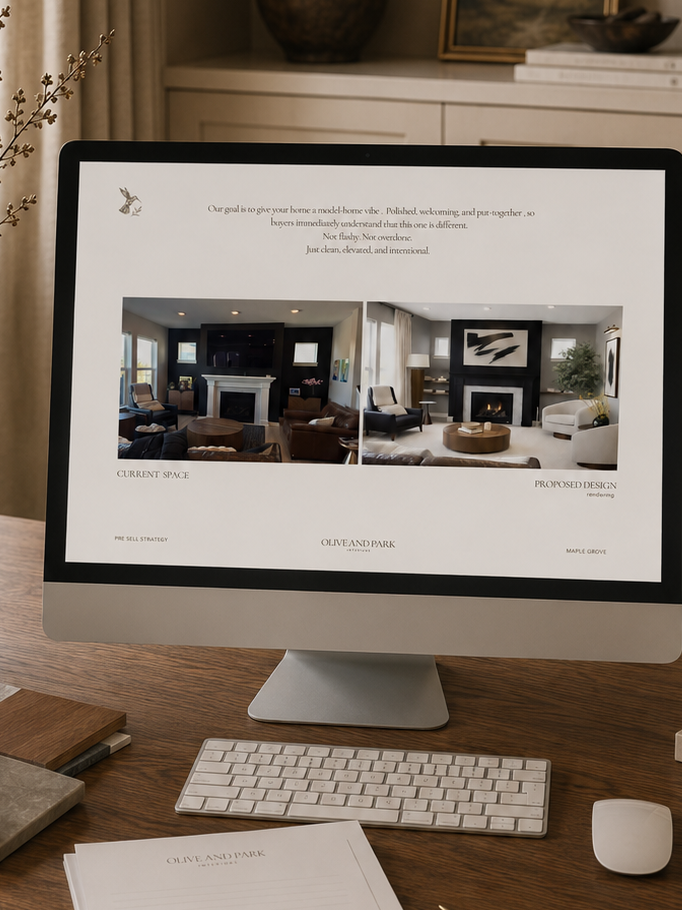
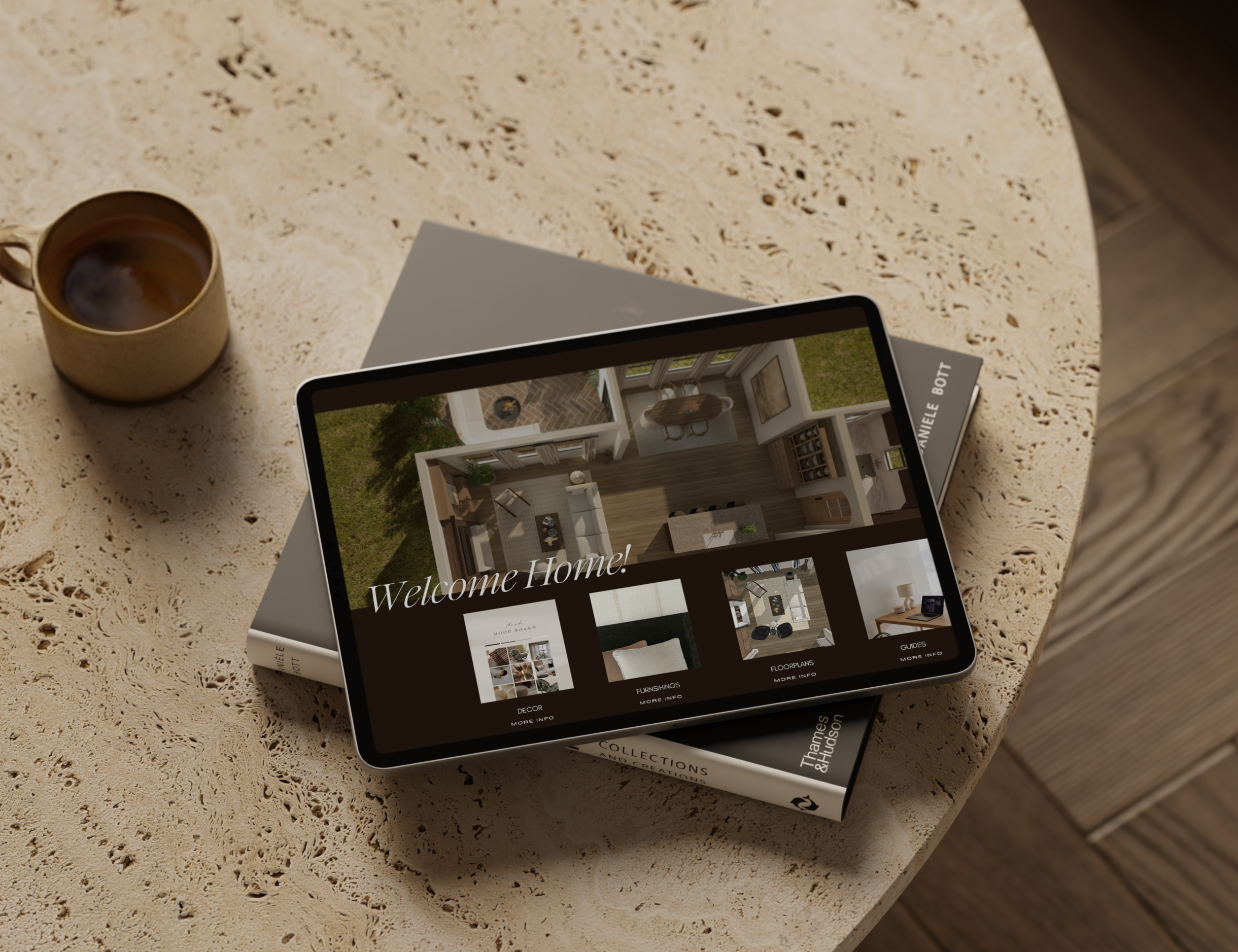
- renderings to communicate vision clearly
- sourcing lists for permanent improvements
- sourcing lists for furnishings the homeowners could later take with them
- light staging strategy
- listing photo styling
- open house styling refinement
This is where our work moves beyond traditional staging.
We are not simply filling empty rooms.
We are strategically positioning a lived-in home to compete.
What Actually Changed
The strongest transformations are rarely about doing more.
They’re about doing the right things.
Refining Visual Weight
One of the most important shifts in this home involved visual balance.
The house already had character, which we loved. Rich paint colors, layered details, and strong personality were already part of the story.
However, some of that visual weight was landing in the wrong places.
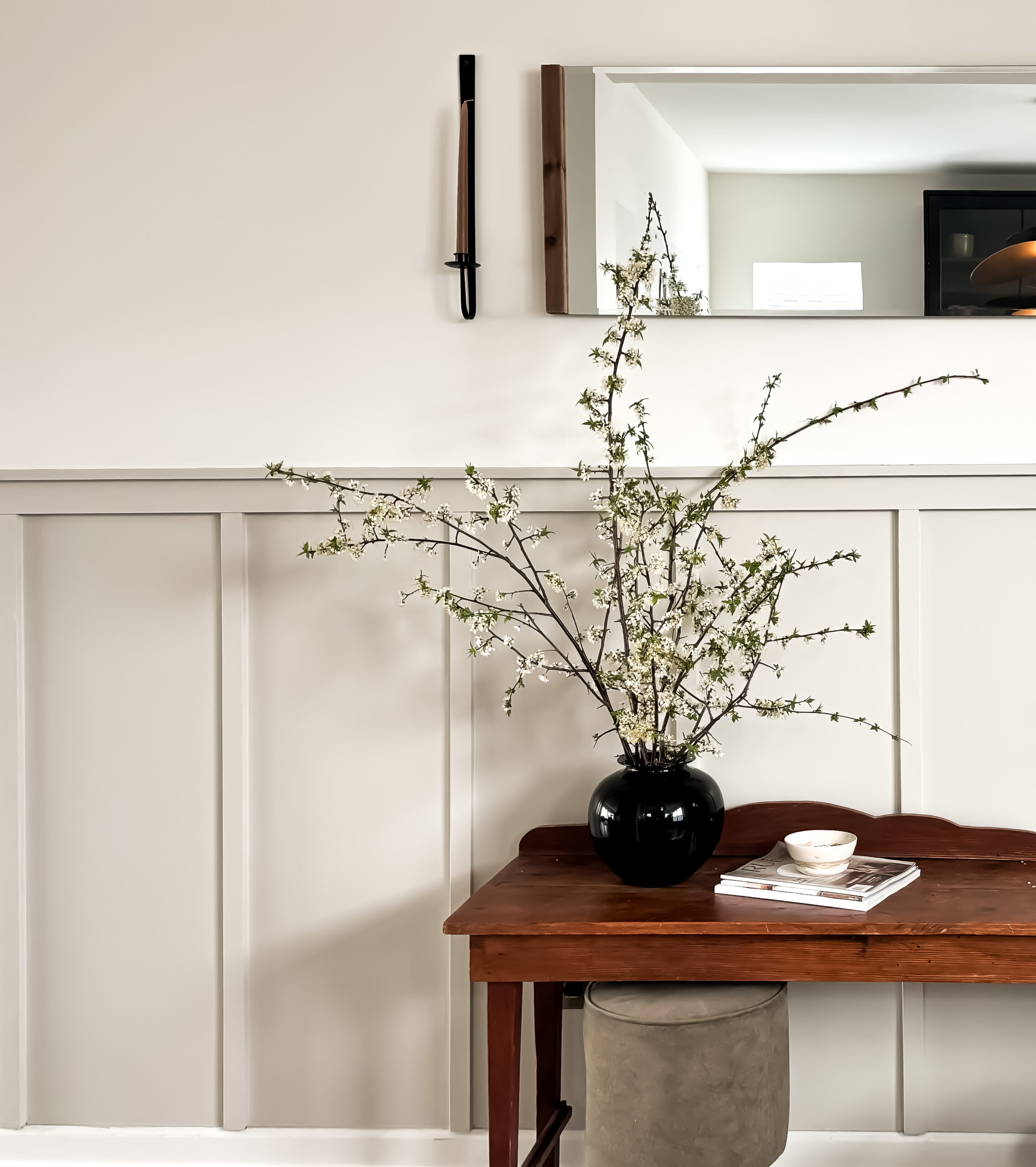
The entry, for example, felt heavier than it needed to.
Rather than neutralizing everything, we refined contrast placement.
We preserved drama where it created sophistication.
We lightened areas where buyers needed breathing room.
That subtle shift dramatically changed how the home felt.
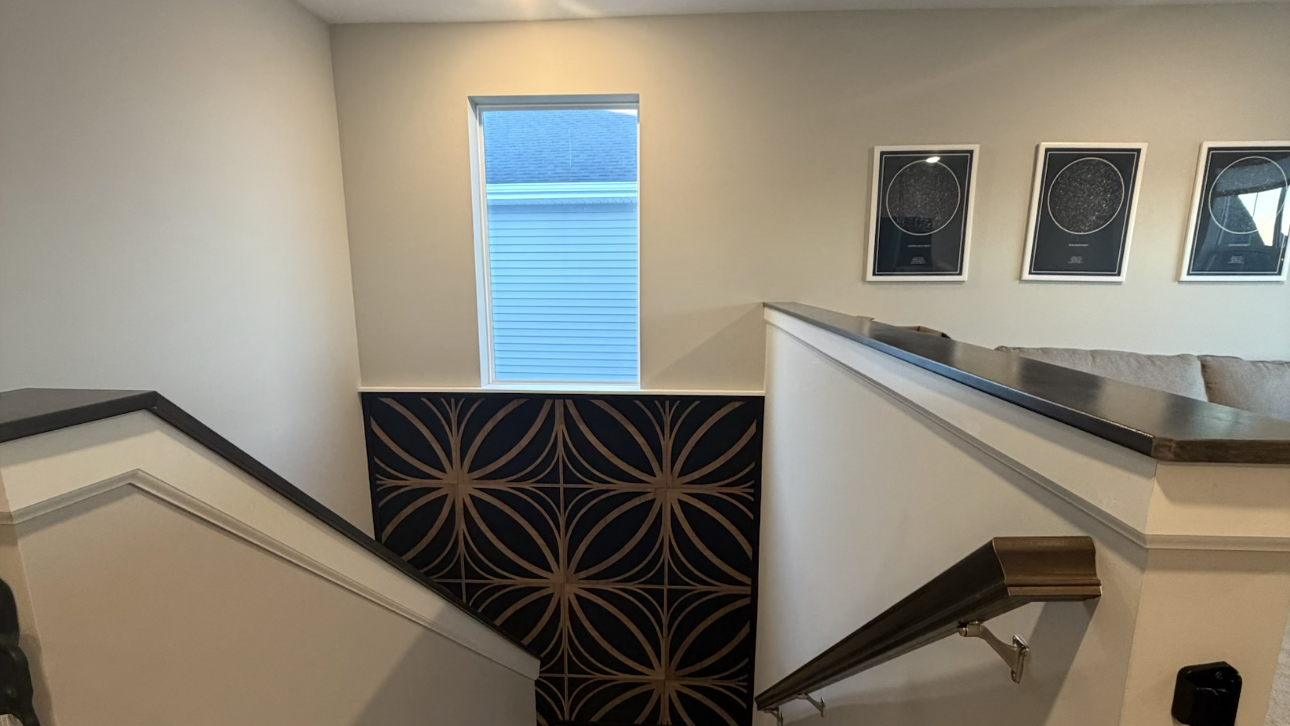
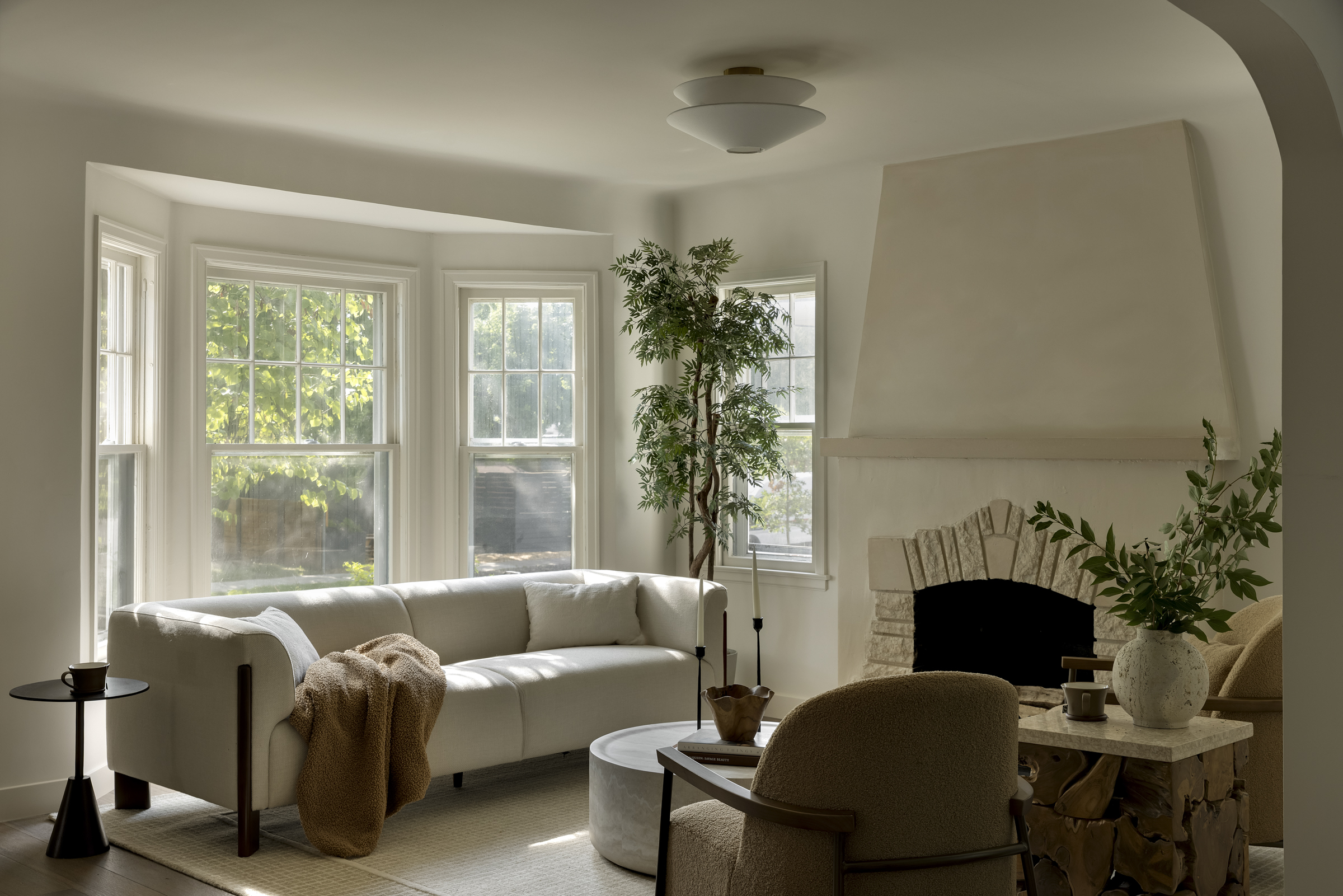
Before
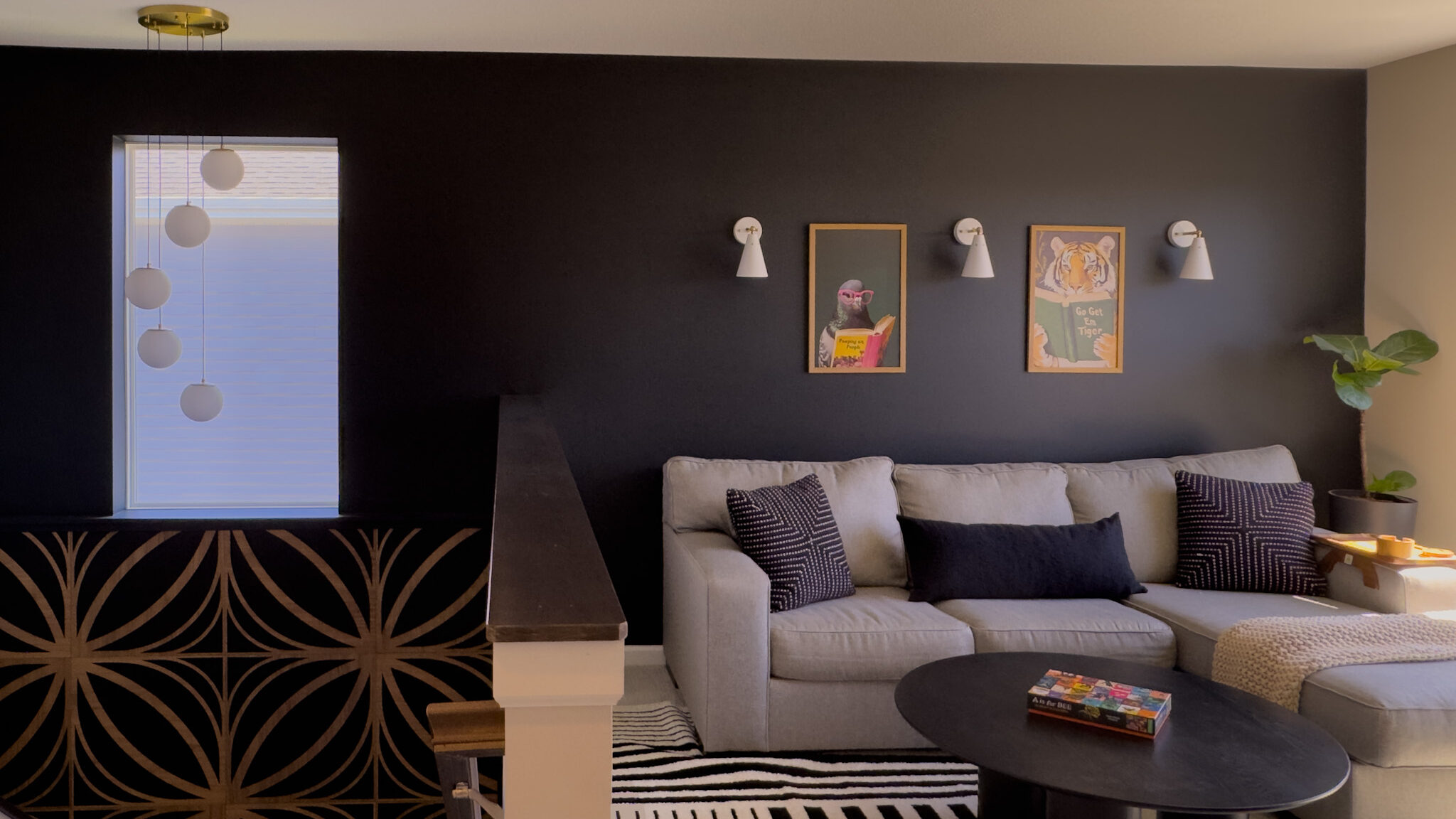
after

before

after
Upgrading Builder-Level Moments
Builder-standard details often create an immediate perception gap when buyers compare resale homes to polished model environments.
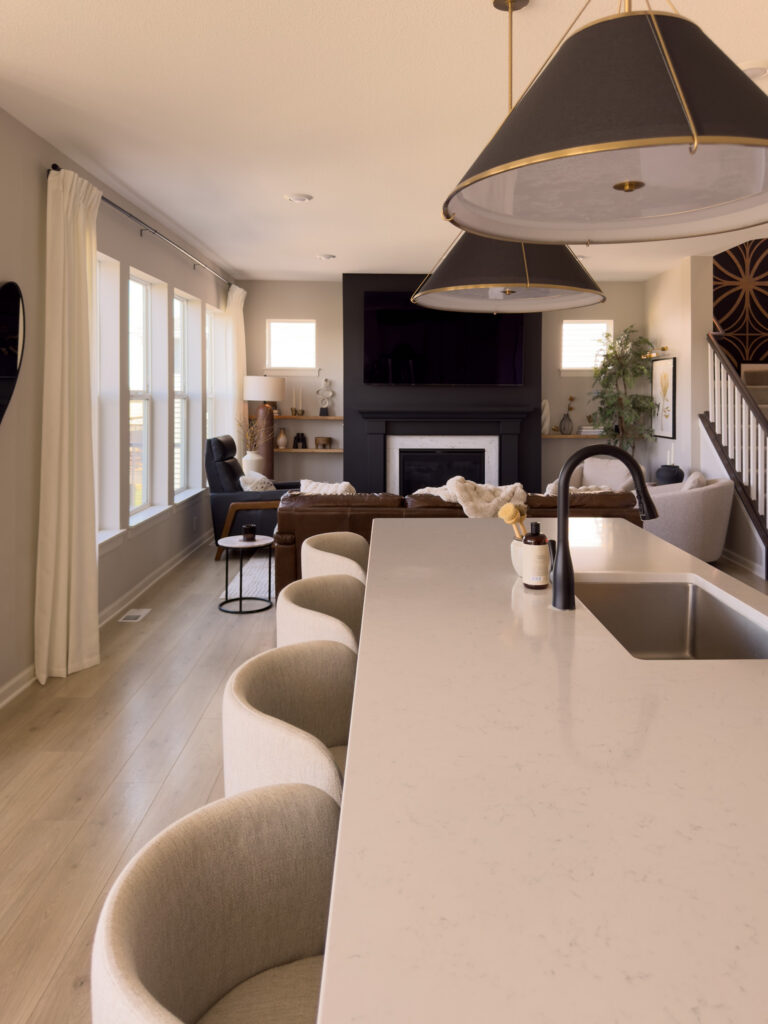
Lighting was one of the clearest opportunities here.
The original kitchen pendants came out.
In their place, we introduced larger statement fixtures with stronger scale, cleaner presence, and a more elevated finish story.
We also layered in sconces and statement lighting throughout key transition spaces to create rhythm, cohesion, and stronger emotional impact.
Small detail.
Massive perception shift.

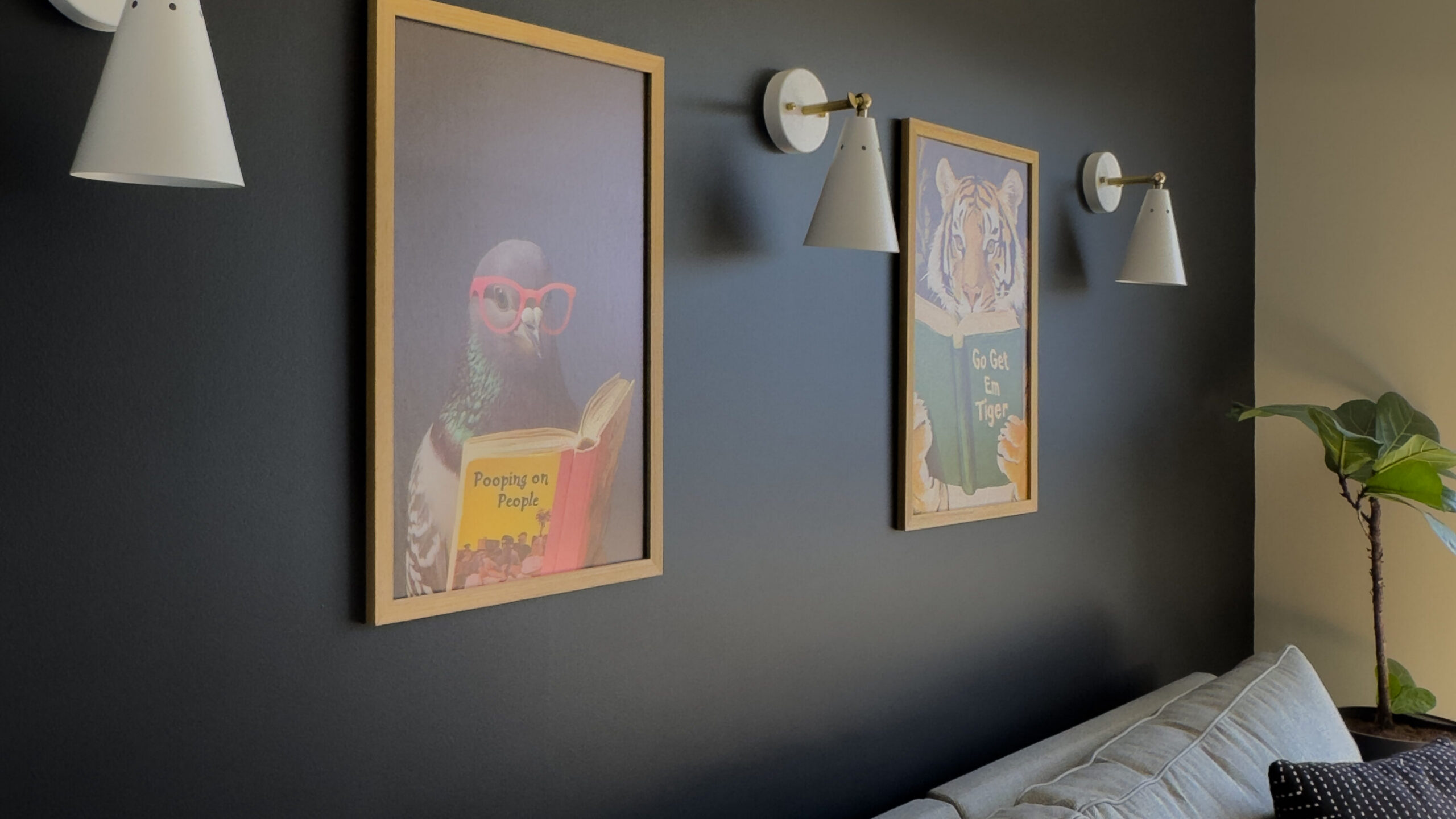
Reworking Scale and Flow
Many lived-in homes have furnishings that function beautifully for everyday family life but unintentionally work against listing presentation.
That happened here.
A few oversized pieces compressed the visual flow and disrupted cohesion between spaces.
So we edited strategically.
We removed heavier furnishings, refined layout decisions, and introduced pieces that helped the home feel lighter, more expansive, and more emotionally open.
The goal was never emptiness.
The goal was clarity.
Reframing the Pool as a Lifestyle Asset
Pools in Minnesota can be complicated.
Some buyers see maintenance.
Others see possibility.
Ignoring that dynamic would have been a mistake.
So instead, we leaned into the emotional upside.
Rather than treating the backyard as an accessory, we positioned it as part of a broader lifestyle narrative.
Modern suburban family living.
Summer entertaining.
Kids in the pool.
Weekend grilling.
Indoor-outdoor flow.
Relaxed California-casual energy layered into a warm contemporary suburban setting.
That reframed a potential objection into a meaningful differentiator.

Why Styling Before Listing Matters
This is where many sellers wait too long.
Listing photos are often the first showing.
If the home doesn’t communicate clearly online, buyers may never schedule the in-person tour.
That’s why we returned before photography to style the entire home, including exterior spaces.
Later, we came back again to refine everything before the open house.
Because styling is not fluff.
It tells buyers:
- this home is cared for
- this home is complete
- this home is cohesive
- this home is move-in ready
- this home is worth paying attention to
Buyers decide quickly.
Often within the first few seconds online.
Then again within moments of stepping through the front door.
The Results
The home listed at $675,000.
Within just 7 days, it sold for $700,000.
The open house generated multiple offers.
Even more telling?
The buyers purchased the main-level furnishings as part of the sale.
That says something important.
They weren’t simply buying square footage.
They were buying the lifestyle the home made them feel.
Strategic Pre-Sale Design vs Traditional Home Staging
If you’re searching for:
- home staging Minnesota
- occupied home staging
- luxury home staging
- pre-listing staging
- home styling before selling
- preparing your home for sale
what you may actually need is strategy first.
By contrast, traditional staging often casts a wide net.
Strategic pre-sale design focuses on positioning your home for the right buyer.
That distinction becomes especially important when your listing is competing against:
- new construction
- polished builder inventory
- similar floorplans
- design-forward resale homes
- buyers with elevated expectations
Selling a Home in Maple Grove or the Twin Cities?
If you’re preparing to sell and want more than a generic staging consultation, our in-home Pre-Sale Design Strategy consultations are designed for exactly this.
Ideal for:
- move-up sellers
- occupied homes
- suburban resale listings
- homes competing with new construction
- sellers seeking stronger ROI without unnecessary renovation
We evaluate:
- buyer perception
- trust leaks
- selective upgrades
- styling opportunities
- listing readiness
- emotional presentation strategy
With optional styling and light staging implementation support.
Because selling well is not about doing everything.
It’s about doing the right things.
Book your in-home Pre-Sale Design Strategy consultation


send an email
linkedin
facebook
If this post resonated, pass it along.
share this post